Your Spice Shelf
Since it’s the spices and seasonings, judiciously blended, that give Indian food its distinctive character, it’s worth while to examine them one by one and become acquainted with their qualities and uses.
 ASAFOETIDA (hing):
This aromatic resin, from the root of
Ferula asafoetida, is used in small pinches for its distinctive taste and medicinal properties. Asafoetida is so effective in preventing flatulence that it can cure horses of indigestion. It’s available as a resin or as a fine powder. The resin form is the purer of the two, but you have to grate it when you need it. Powdered asafoetida is mixed with white flour, but it’s more convenient to use. Add a pinch or a fraction of a teaspoon to hot
ghee or vegetable oil for a second or two before adding the other ingredients. If you can’t find asafoetida or don’t want to use it, your recipes will be all right without it.
 CARDAMOM (elaichi):
The pale green seed pods of this member of the ginger family,
Elettaria cardamomum, are used to flavor sweets, or are chewed as a breath sweetener and digestive. White cardamom pods, which are nothing other than bleached green ones, are more easily available, but have less flavor. When cooking with whole pods, remove them before serving, or push them to the side of the plate. They’re not meant to be eaten whole. When a recipe calls only for the black, pungent seeds, remove them from the pods and pulverize them with a mortar and pestle or with a rolling pin. Ground cardamom seeds are used in
garam masala.
 CAYENNE PEPPER (pesa hui lal mirch):
Cayenne powder, made from dried red chilies, is often called red chili
powder. This is the spice that makes Indian food hot. Use it according to your taste.
CHILLIES, fresh (hari mirch): These bright red or green seed pods of Capsicum annum are found in both Asian groceries and in supermarkets. The flat, round, white seeds on the inside give hotness to food. If you want flavor without hotness, make a slit in the pod and remove the seeds with the tip of a small knife. Wash your hands carefully with soap and warm water after handling chillies, because their volatile oils irritate the skin. Store them unwashed, wrapped in newspaper, in the refrigerator. Discard any that go bad.

CHILLIES, whole, dried (sabut lal mirch): Dried red chili) pods are used extensively in Indian cooking, for hotness and flavor. When crushed chillies are called for, grind them with a mortar and pestle or break them into tiny bits with your fingers. Remember to wash your hands after touching them. If you don’t like chillies you can use fewer than called for or eliminate them entirely from the
recipe.
 CINNAMON (dalchini):
True cinnamon comes from the inner bark of an evergreen tree,
Cinnamomum zeylanicum, native to Śrī Lanka and the West Indies. Look for the thin sun-dried bark sheaths sold packed one inside the other. When using whole cinnamon sticks in chutneys or rice dishes, remove the sticks before serving the meal. Rather than buy ground cinnamon, buy whole sticks to dry-roast and grind as needed. The strong-flavored, slightly bitter cinnamon commonly sold in the market,
Cinnamomum cassia, comes in single thick pieces or in powdered form. It is a poor substitute for the other, which has a delicate, sweet taste.
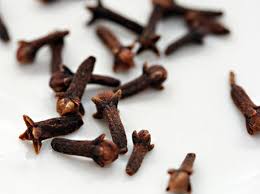 CLOVES (laung):
This dried flower bud of the tropical tree
Myrtus caryophyllus has always been the basis of the spice trade. The word
clove comes from the Latin
clavius meaning “nail”, which describes its shape. Clove oil is antiseptic and strongly aromatic. It is said that the custom of “chewing the clove” when addressing the emperor started in China. During the reign of Queen Elizabeth I, it was the custom of courtiers to chew cloves in the Queen’s presence. Cloves can be used as a blood purifier, a digestive aid, and a local analgesic for toothache. Dry-roasted and ground, they are an essential ingredient in
garam masala. Buycloves that are well formed and plump, not shrivelled and dusty.
CORIANDER, fresh (hara dhania): The fresh leaves ofCoriandrum sativum are as widely used in India as parsley is in the West- not mer
ely as a garnish though, but as an essential flavoring. Sometimes called cilantro or Chinese parsley, fresh coriander is worth looking for. Its delicate taste is unique. You can substitute parsley if coriander isn’t available, but the flavor won’t be the same. Fresh coriander is generally sold in bunches. To store it, put its roots or cut stalks into a small vase of water, insert the vase into a plastic bag, and keep it in the refrigerator. They will keep for more than a week. Wash it just before using it. Use the leaves and the upper portions of the stalks, chopped.
If you have difficulty buying fresh coriander (or fresh fenugreek), you can easily grow it yourself. Scatter some coriander seeds in a small patch of the garden, cover them with a thin layer of soil, and water them every day. They will germinate in 18 to 20 days and grow rapidly. Pick the stalks when they are about 6 inches (15 cm) high and before the plants go to seed.
CORIANDER SEEDS, whole and ground (dhania, sabut andpesa): Coriander seeds are round, beige, and highly aromatic. A most important spice in Indian cooking, they are becoming increasingly popular in the West. In 1983, the United States and England each imported over three million tons of coriander seeds. The oils in coriander seeds help assimilate starchy foods and root vegetables. Generally ground before use, coriander seeds impart a fresh, springtime aroma to foods. To get the most flavor, buy the seeds whole and grind them in small quantities with an electric grinder.
 CUMIN SEEDS
, whole and ground
(safed jeera, sabut and
pesa):The seeds of white cumin,
Cuminum cyminum, are an essential ingredient in preparing vegetable curries, rices, savories, and
dal.Although ground cumin is available in all supermarkets, it’s better to grind your own. When a recipe calls for roasted cumin, fry the amount of seeds you want in a pre-heated frying pan. Shake the pan until the seeds darken a little and become fragrant. If you need roasted and ground cumin seeds, put the roasted seeds into an electric coffee grinder and grind them fine. If you don’t have a coffee grinder, use a mortar and pestle, or simply crush the seeds with the back of a spoon.
Kala jeera, or black cumin seeds
(Cuminum nigrum), smaller and darker than the white ones, have a more bitter taste and a sharper smell.
 CURRY LEAVES (kari patti):
The fresh leaves from the Kari tree of Sout
Murraya koenigri, are used mainly as an aromatic and flavoring for curries and soups. Dried leaves are more easily available but less aromatic than fresh ones. When starting a curry or
masala, put the fresh or dried leaves into the oil to fry until crisp.
hwest Asia,
 FENNEL (sauf):
Sometimes known as “sweet cumin,” the long palegreen seeds of
Foeniculum vulgare look like cumin but taste like anise seed or liquorice. Fennel seeds are sometimes u
sed in curries. Dry-roasted, they’re an effective breath sweetener. If you can’t find them, substitute an equal amount of anise seeds.
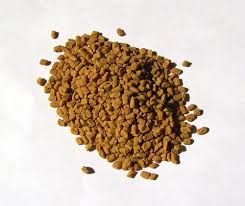 FENUGREEK (methi):
The leaves and tender stalks of
Trigonella fenumgraecum are a popular vegetable in India. Its squarish, rather flat, brownish-beige seeds are essential in many vegetable curries and savories. In India, women eat fenugreek seeds with
jaggery (unrefined palm sugar) after childbirth, to strengthen the back, increase bodily force, and stimulate the flow of breast m
ilk. Fenugreek seeds have a slightly bitter flavor so don’t exceed the recommended quantities, and avoid burning them, which makes them more bitter. Fenugreek, like coriander, is easy to grow.
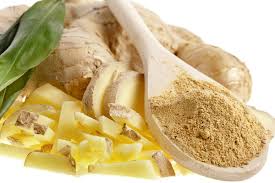 GINGER
, fresh
(adrak): This light-brown knobby rhizome of
Zingiber officinalis is used extensively in all forms of Indian
cooking. Choose fresh ginger that is plump and not shrivelled, that has firm flesh, and that is only slightly fibrous. Before you chop, grate, slice, or grind ginger into a paste, scrape off its potato-like skin with a sharp knife. To grate ginger, use the fine holes of a metal grater. Powdered ginger can’t be substituted for fresh, because the flavor is different. Dried ginger (sonth), more pungent than fresh ginger, must be soaked before use. (One teaspoon of dried ginger equals one tablespoon of chopped fresh ginger). Ginger is used medicinally for colic and dyspepsia. Eaten in small quantities it cures stomach-ache, and ginger tea is an excellent remedy for colds.
 KALINJI SEEDS (kalinji):
These are the black, teardrop-shaped seeds of the onion plant
Nigella indica. They impart a faint onion flavor and are used in vegetable dishes and
pakora batter. Although often confused with black cumin seeds, the two have nothing in common. If they’re unavailable, simply leave them out of the recipe.
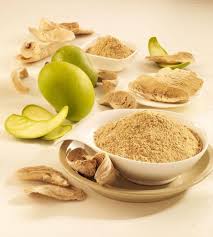 MANGO POWDER (amchur):
The raw fruits of the mango tree,
Mangifera indica, are cut into strips, then dried, ground, and used as a souring and flavoring agent in vegetable curries. Mango powder is used as freely in North Indian cooking as lemon is in Western cooking to give food a tangy and sour taste. It burns easily, so use it with care.
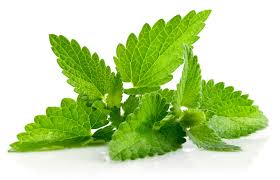 MINT LEAVES (pudina ki patti):
The two most common mints are spearmint
(Mentha spicata) and peppermint
(Mentha piperita). Aside from adding color as a garnish, mint leaves lend a refreshing taste to beverages. They can also be used to make mint chutney. Mint stimulates the digestive tract and will allay nausea and vomiting. You can easily grow the plants at home in practically any soil, either in sun or in partial shade. Dried mint loses its color but keeps its flavor fairly well.
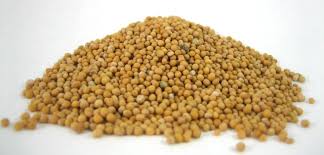 MUSTARD SEEDS
, black
(rai): Indian cooking wouldn’t be the same without the seeds of
Brassica juncea. Black mustard seeds are round, tiny (smaller than the yellow variety), and not really black but a dark reddish brown. They are pungent, nut-flavored, and nutritious, and they add texture and eye appeal to a dish. The frying of mustard seeds is one of the highlights of preparing
masalas. You scatter seeds into a small amount of smoking hot
ghee or oil, and a few seconds later they crackle and pop-and jump out of the pan unless you cover it quickly.
 NUTMEG (jaiphal):
Nutmeg is the kernel of the seed of the tropical tree
Myristica fragrans. Buy whole kernels that are round, compact, oily-looking, and heavy. They may be dark, or white from the lime used to repel insects. Grated nutmeg is used in small amounts (sometimes with other spices) to flavor puddings, sweets, and vegetable dishes. It’s best to grate nutmeg straight into the dish; once grated it rapidly loses its flavor. Store whole or powdered nutmeg in a tightly closed container.
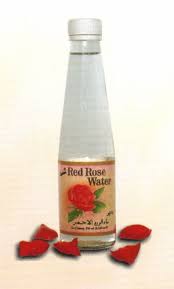 ROSE-WATER (gulab-jul):
Rose-water is the diluted essence of rose petals extracted by steam distillation. It’s a widely used flavoring in Indian sweets and rice dishes. You can use a measuring spoon for rose-water, but if you cook with rose essence or concentrate be careful not to use too much. Count the drops.
SAFFRON (kesar): Saffron is known as “the king of spices.” It’s the dried stigma of the saffron crocus, Crocus sativus, which is cultivated in Kashmir, Spain, and Portugal. Each crocus flower has only three saffron threads, so one pound of saffron takes the handplucked threads of about seventy thousand flowers. Saffron is expensive, but a little goes a long way. Beware of cheap saffron or “bastard saffron.” It looks similar and gives a saffron color, but it has none of the authentic fragrance.
Saffron has a pleasant delicate flavor and imparts a rich yellow color to whatever it’s mixed with. It’s used for flavoring and coloring sweets, rice dishes, and beverages. To extract the flavor and bright orange color from the saffron threads, dry-roast them slightly and then crumble them and steep them in a tablespoon or so of warm milk. Then pour the milk into the dish to be flavored. Saffron is also available in powdered form, which is twice as strong as the threads.
TAMARIND (imli): This sour, acid-tasting seasoning comes from the large broad bean pod of a tropical tree, Tamarindus indica.The brown flesh (sometimes with the dark shiny seeds) is scraped from the pods, dried, and sold in packets.
To use, remove the seeds and tear or chop the pulp into small pieces. Boil the pieces in a small amount of water for about 10 minutes, or until the pieces of pulp soften and fall apart. (Use about one cup [250 ml] of water to 8 oz [225 g] of tamarind). Then force as much of the pulp as possible through a strainer. Keep the liquid and discard the fibrous residue left in the strainer. If tamarind is unavailable, you can simulate its flavor somewhat by a mixture of lemon juice and brown sugar.
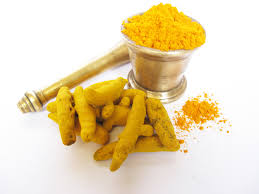 TURMERIC (haldi):
A member of the ginger family
(Curcuma longa), turmeric is a rhizome that varies in color from dark orange to reddish-brown, but when dried and ground into powder it is always bright yellow. It is used in small amounts to give a warm, pungent flavor to vegetables, soups, and savories, or simply to add color to rice dishes. Ground turmeric keeps its coloring properties for a long time but loses its aroma quickly. One ounce is enough to keep at home unless you live on spicy rice and curries. Turmeric stains, so be careful with your clothes. It also burns easily, so cook it with care. Turmeric is used in
Ayur-vedic medicine as a diuretic, blood purifier, and intestinal stimulant.


